
SCENE:
Female writers, It-girls, Didion, and Babitz.

A little over a year ago, I wrote about “the female writer”: an icon, an ethos, and a cultural landmark I don’t always know what to do with. I wrote about the performance I think is necessary in order for the public to accept, respect, and adore her, my annoyance with the Carrie Bradshaw worship that is the Substack Notes page, and, in all, the catch-22 of being one, if I am one. After all, at what point do you stop being a girl with a Substack and start being a female writer?
Preparing to write this, I expected to completely revise my thoughts; that is, I figured I must have botched the writing last time and this would be a complete re-dux of my position on the female writer. However, in re-reading and summarizing it, I didn’t do too bad a job! Decent work, past Maria; I’m sorry I doubted you. Nonetheless, I am returning to, and elaborating on the subject of the female writer today, because the great blessing/curse of the human condition is to keep thinking, to never accept what’s past as given. So.
Now, I am not wholly original in my return to this topic: it’s because I’m reading Didion & Babitz, Lili Anolik’s dual biography/sketch of the 60’s and 70’s Hollywood scene that made these two women the female writers that they are. I am only 71 pages in, and I can’t stop thinking about them. BUT. This essay is not a book review, that’s not my niche.
That’s my friend April’s niche (and I am trying to con her into reading this, so go flood her blog), plus, Jensen McRae already wrote a fantastic discussion of the book, which was a driving factor in my picking it up.
In fact, this essay isn’t entirely a revisitation of the female writer idea, after all. “The female writer” is, for now, an extension of a different idea. “The it-girl”. In order to be revered, I think, the female writer must also be an it-girl, and in my opinion, that takes a hell of a lot of work: quite a bit of polishing, performing, and toeing of the line between stylish pushing of the envelope and garish disturbing of the peace1. In order to be a true “female writer” you must be a champion of your sex and therefore semi-progressive but also stay the course: never really change the landscape of writing, the landscape that makes being a female so notable in the first place.
Ordinarily, I never would have verbalized the necessity to “female writers” of being “it girls”, because at some level I have to admit that I’d like to be a female writer. I would not like to be an it girl. Hell, have you read my Offline series? Keep me OUT of public perception, please. (She says, fully aware that she publishes and posts these essays on a necessarily social part of the internet and that without the social internet she would have no readers—the hypocrite.) The call of trying to be an “it girl” feels like such a social media marketing scheme, or in the eras before ours, a magazine marketing scheme. To aspire to be someone other than yourself, someone who attracts attention by her very being, someone who is both artist and muse, is unattainable, mythical. God forbid a woman be flesh and blood, right?
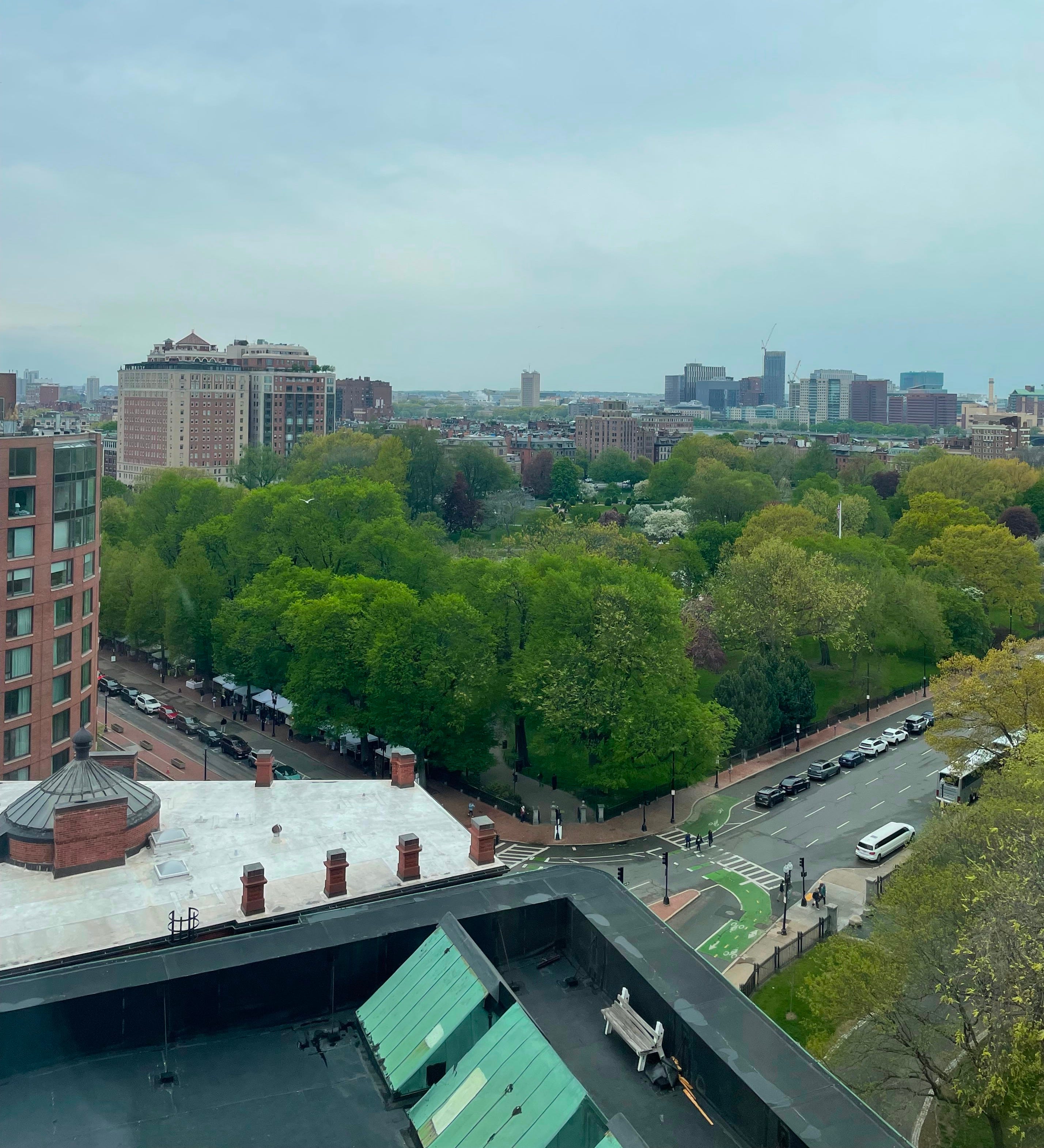
Except, Didion & Babitz, in the short time I’ve spent with it, has convinced me that “scenes” and “it-girls” are far more within reach than I’d realized. That the artistic consciousness is as likely to develop in my backyard as at 7406 Franklin Avenue.
In order to understand why this is what I’m getting from Didion & Babitz, you have to know how I approached the book. I started a little out of the loop, a bit convinced I needed to do background research on Joan Didion and Eve Babitz. I have only ever read one work of Didion’s and I’d never heard of Babitz except on the back cover of this book. To compensate: I read an article about Babitz written by Anolik ahead of the book’s release, and watched 10 minutes of The Center Will Not Hold, the documentary about Joan Didion made by her nephew.
My fear had been that I really only know Joan Didion as an idea. A vague idea at that. In fact, I don’t know the idea of Joan Didion very well.
I know of the idea of her. Joan Didion:
a female writer,
in some ways detests women
but in some ways is our great champion of the gender.
she’s got some kind of tortured artist thing going on.
the “hot girls who read” crowd idolizes her.
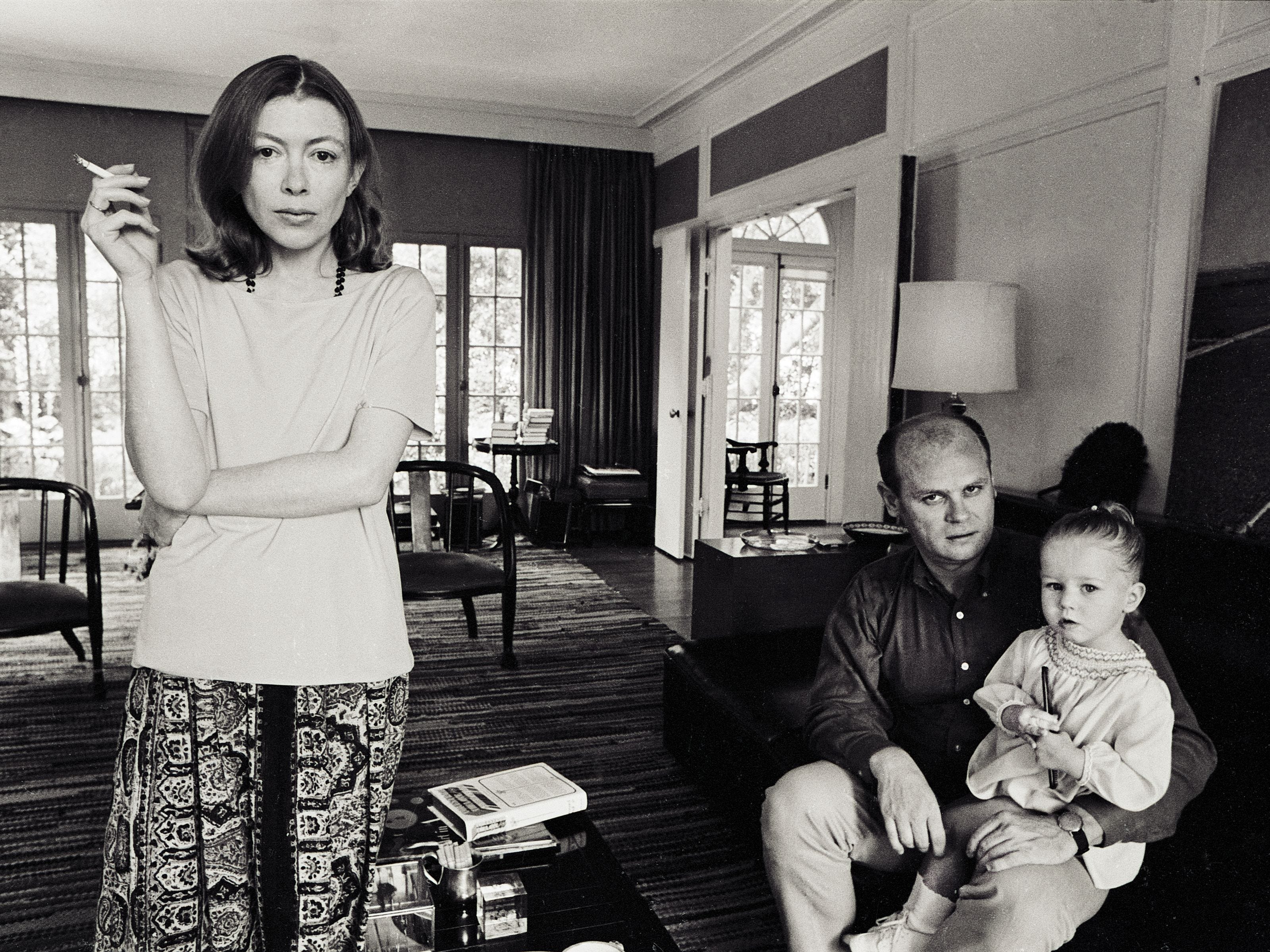
In sum, that she is the literary equivalent of… hmmm… Carolyn Bessette Kennedy? Yeah. That feels right. Joan Didion is a female writer is an it-girl. These things are ideas, all three of them.
The one concrete piece of insight into Joan Didion I do have is why she writes. That’s the piece of hers I’ve read, Why I Write. Shoutout to my playwriting prof who had us read her alongside George Orwell, cementing my classification of her among the greats, among the “thinkers I’d like to think like”2 . When I had devoured Anolik’s introduction, she had offered a characterization of the book as a study of the development of the female creative consciousness—this was the part of Didion I loved, not the part I doubted.
So when my hunger for this book outpaced my patience for background research, I dove into the first chapter anyway. At that point, I realized Anolik wasn’t going to leave me high and dry, instead, she painted me a very detailed picture of how Eve Babitz came to be Eve Babitz. I feel I understand, at least in some way, how the scenes she was a part of became a part of her, and how she in turn became an it-girl, a part of the texture of said scene. I guess, in this way, this essay is a bit of a book review: shout out to Anolik for showing me quite vividly how the world around her (the people, art, aesthetics, and ideas of her part of Hollywood) is a cornerstone of who Eve Babitz became, and, in turn, how Eve Babitz, the idea and the flesh and blood girl was a cornerstone of that world.
When I say world, it’s because I’ve been avoiding using the word “scene”, although that’s the appropriate one. I had never gathered, really, what a “scene” was. Such a vague word, really: one that describes set dressing as much as it does the nuances of culture and hierarchies of popularity and power. Only, in my reading, I’ve become convinced of something.
I am beginning to think that I am as much a part of a scene as you are. As Eve was. As Joan was too, I’m sure I’ll read on to find out. And therefore, we might have just as much capacity to be, and in fact might already be, “it-girls”. The possibility of female-writer-hood might be yet again within reach.
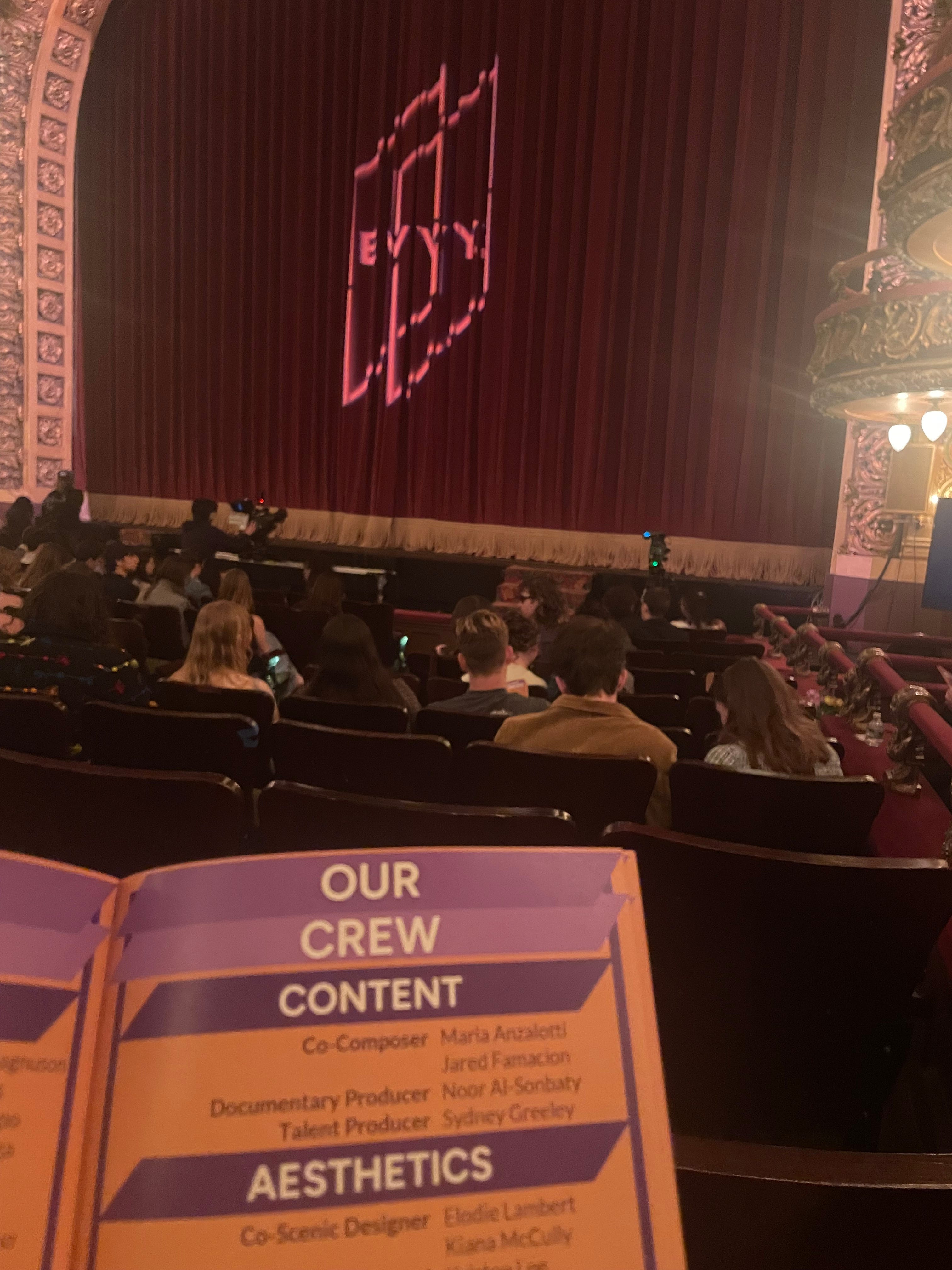
Now, it’s slightly easier for me to say that I’m a part of a scene, because the notion tends to be associated with artists, with celebrity and status of some kind. I happen to go to arts school, where I am surrounded by people who are trying to be somebody. People who are talented, beautiful, and always working together in new and interesting ways. I’m sure some of them, someday, will be somebodies, maybe I will be too. Maybe that’s why I can make this jump more easily, see myself as a part and product of a scene in the way Eve and Joan were.
We assume scenes must be glamorous, full of celebrity and notoriety, only because those are the scenes our eyes are pointed towards. That’s where we’ve always found the Clara Bow’s, the Carolyn Bessette Kennedy’s, the Eve Babitz’s, the Joan Didion’s. The nature of celebrity is to have attention paid. If we weren’t looking at these scenes, they might as well not exist, right? No! These celebrity scenes do exist: the parties at Marcel Duchamp’s, Cassandra Gray’s; SNL afterparties, Coachella caravans; hell, even the tight circle that seems to be Dropout.tv, SMOSH, and Mythical. And they would exist whether we looked or not: the confounding variable, making us think celebrity causes a scene rather than just accompanies the scenes we identify, is our attention! Our attention makes celebrity, celebrity does not make a scene.
At the end of the day, my dear readers, scenes are little more than “who’s who”s. If you could make a variation of the cafeteria scene from Mean Girls3 about a certain set of people, joined by some geographical commonality (a school, a club, a bar, a house, a neighborhood), you’re set. That’s a scene. A cast of characters, a place they gather, and a general understanding of the motivations at play. Everyone gets something from everyone else, in some way. Whether its status, inspiration, power, popularity, legitimacy, or literal goods and services: “scenes” are circles of exchange. Exchange of ideas, of relationships, of values, and of aesthetics.
Everything about a “scene” is both flesh and blood (the seats at the table in someone’s living room, the blood, sweat, and tears they put into your work, the hands around waists causing a million connotations) and ethereal (values asserted in the curl of hair, subtle hierarchies organized via glance and gaze, cultural norms battled on in each conversation). In both of these modes, people, it-girls, are created. Whether its Eve Babitz, Joan Didion, or you or me.
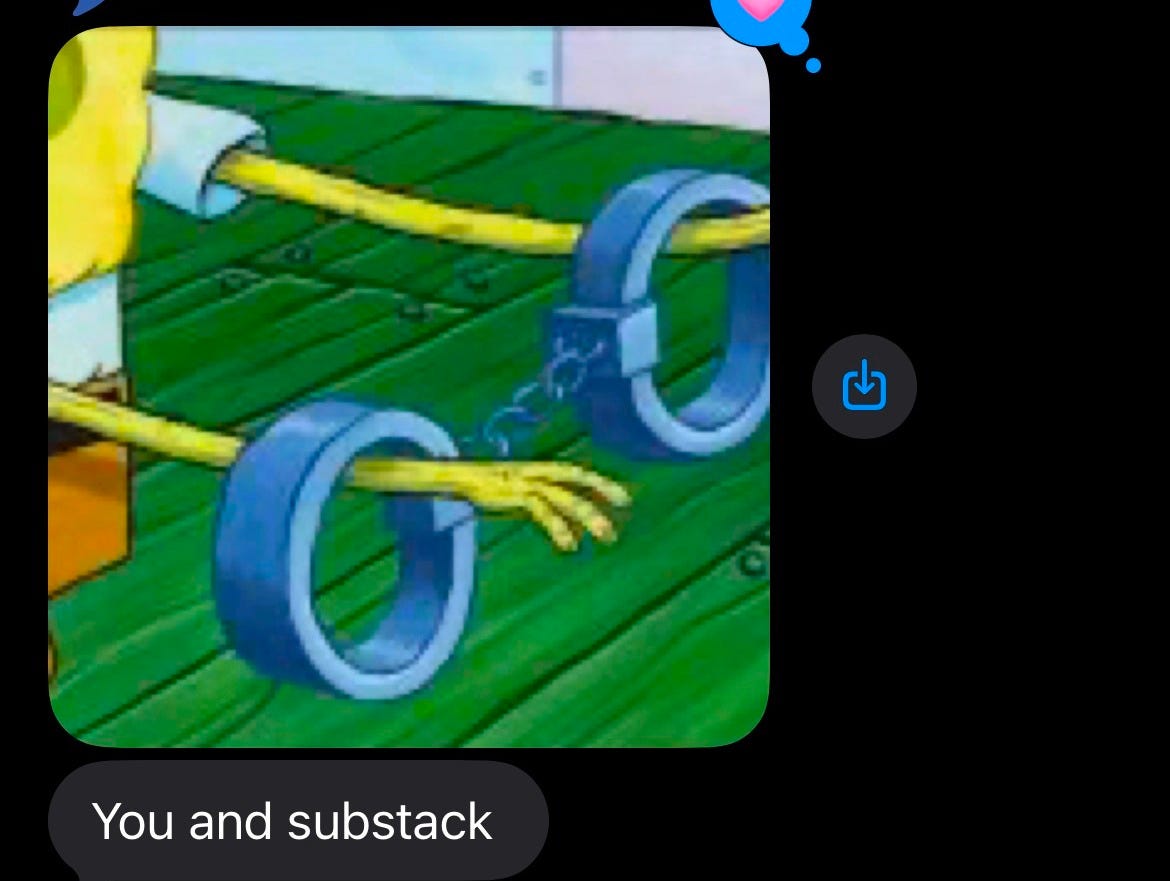
So finally we arrive at the conundrum where we started. What does it mean to be an it-girl? To repeat myself, at what point do I stop being a girl with a Substack and start being a female writer?
I am beginning to think that “it”, the quality of standing out, of being part inspiration and part inspired, is more accessible than celebrity would have us think. Yes, I do think attention has something to do with “it” factor. After all, if I wanted to just throw out the idea wholesale, I could say it doesn’t matter who is “it” and who isn’t, but I can’t ignore the truth that is taste-making. What I am throwing out is the minimums on scale. How wide your reach has to be before you’re it.
It-girls like Didion and Babitz are ideas, and I can say that without much argument because none of us know them personally, and yet they have influence that reaches us or the people around us. They are sites of worship. They are icons, monuments, female writers. But it isn’t their popularity, the scale of their influence that makes them ideas. We are all ideas to each other.
I hope and pray that we engage in our relationships with a little more nuance than thinking of people as mere ideas of themselves, assuredly. We relate to each other as flesh-and-blood, and that’s important. But, necessarily, as thinking creatures, we have ideas of each other. There is something in your head when you think of me, whether you’re my grandma, my best friend, or someone who discovered this Substack on the wilds of the social internet. To say that I am not an idea to you is reductive. I am both a person and an idea.
To accept one truth does not deny the other, just as a scene is ambiguous, as physical as it is intangible. Babitz and Didion were living, breathing, fucking, and fighting people, as much as they were ideas, representations, and aesthetics: both axes of who they were had as much impact on the scene as the other. A scene needs physicality, and it needs values. It-girls are both. We all can be both.
I influence people in small ways, whether they read my written word or not. I occupy a physical spot in my ecosystem. I exchange ideas, values, aesthetics. I am inspired, and I inspire. So maybe, in my very own scene, I am an it-girl. I am a female writer. So, Didion & Babitz. Not so far off, are we?
Love,
Maria
I’m reminded of a video essay I watched this week on how the NYT “Did Women Ruin the Workplace” opinion piece is symptomatic of the publications long-standing and merely-resurfacing resistance to worker rights… How in this interview, the prevailing opinion was, of course, sexist, but mostly concerned with the disruption of the workplace and how women’s “inherent problems” create obstacles to the status quo (worker exploitation. how dare you expect maternity leave? or acknowledge emotion? or ask not to be ridiculed?) The New York Times, according to this essay, has always been interested in propping up liberalism so long as their authority, power, and infrastructure are not questioned. Ie: you can argue whatever destructive opinion you’d like so long as you, the employees of The New York Times, don’t hold us accountable for our power or take any of your own. So the female writer is quite related…
methodologically speaking, of course! I mean that I am encouraged by the works of big thinkers who prove that I can think fully and transformatively and thoroughly, not that I want to think their thoughts. In fact, I find no aspiration at all to think things people have already thought.
please know how hard I am resisting the urge to put a clip of my high school district production of Mean Girls the musical here. I was Janis. We were fantastic. You get the idea.